Generative AI Revolution: Transforming Industries, Redefining Creativity, and Shaping the Future of Work
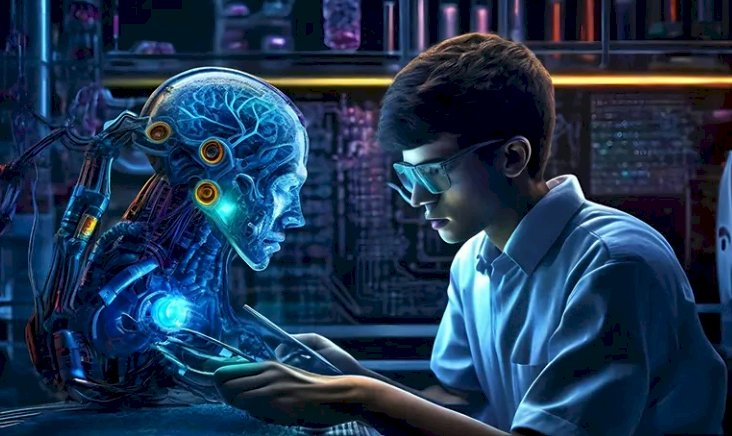
Generative AI (Gen AI) has rapidly evolved from a niche innovation into a transformative force that is reshaping industries, redefining creativity, and fundamentally altering how businesses operate in 2026. Built on advanced machine learning architectures such as transformers, Gen AI systems can generate human-like text, realistic images, code, music, and even complex simulations, enabling organizations to automate tasks that once required significant human effort and expertise. Technologies like ChatGPT and Google Gemini have become central to enterprise workflows, helping businesses streamline customer support, accelerate content creation, and enhance decision-making through intelligent insights. At the same time, creative tools such as DALL·E and Midjourney are empowering designers, marketers, and content creators to produce high-quality visuals and campaigns at unprecedented speed, blurring the lines between human and machine creativity.
Across industries, the adoption of Gen AI is accelerating at a remarkable pace. In healthcare, it is being used to assist in drug discovery, patient diagnostics, and personalized treatment planning, while in finance, it supports fraud detection, risk modeling, and automated reporting. The IT and software development sector is witnessing a major shift, with AI-powered coding assistants like GitHub Copilot enabling developers to write, debug, and optimize code more efficiently, significantly reducing development cycles. Meanwhile, marketing and B2B industries are leveraging Gen AI for hyper-personalized campaigns, predictive analytics, and automated lead generation—transforming how businesses engage with customers in a data-driven economy.
However, this rapid advancement is not without challenges. Concerns around data privacy, intellectual property rights, and misinformation are becoming increasingly prominent as AI-generated content becomes more sophisticated and harder to distinguish from human-created material. Governments and regulatory bodies worldwide are beginning to introduce frameworks to ensure ethical AI usage, transparency, and accountability, while companies are investing heavily in AI governance and security measures. Additionally, the impact of Gen AI on the workforce is a topic of ongoing debate, as automation reshapes job roles and demands new skill sets, pushing professionals to adapt through continuous learning and upskilling.
Despite these challenges, the future of Generative AI remains highly promising. As models become more advanced, multimodal, and context-aware, they are expected to play an even greater role in innovation, from building virtual assistants that understand human emotions to creating entirely new digital experiences in fields like gaming, education, and entertainment. Businesses that strategically adopt Gen AI are likely to gain a significant competitive advantage, leveraging its capabilities to drive efficiency, creativity, and growth. In this rapidly evolving landscape, Generative AI is not just a technological trend—it is a foundational shift that is redefining the boundaries of what machines can achieve and how humans collaborate with them in the digital age.