AI-Powered Robotics Transforming Global Industries in 2026
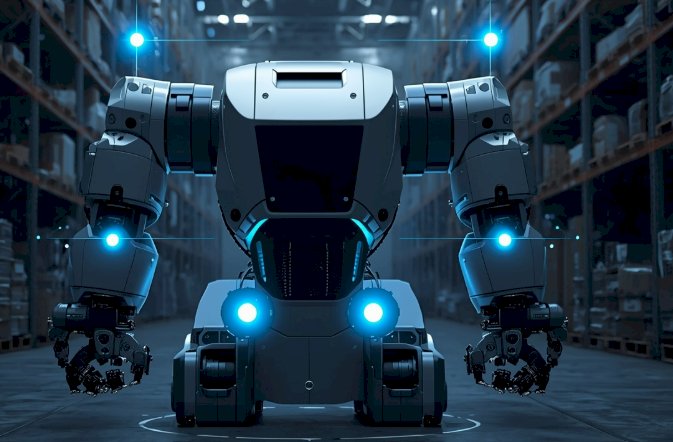
Artificial intelligence and robotics are rapidly reshaping industries worldwide as companies accelerate investments in intelligent automation and next-generation robotics platforms. Recent industry data indicates that the global robotics market is valued at more than $88 billion in 2026 and is projected to surpass $218 billion by 2031, driven largely by demand for automation in manufacturing, logistics, healthcare, and construction. Businesses are increasingly deploying AI-powered robots capable of perception, learning, and autonomous decision-making, enabling them to perform complex tasks with minimal human intervention and significantly improve operational efficiency.
Major technology companies and startups are also pushing the boundaries of robotics innovation. New platforms combining machine learning, computer vision, and real-time data processing are allowing robots to operate more effectively in unpredictable environments. Recently, robotics startup Rhoda AI introduced an advanced robot intelligence platform designed to help machines understand real-world movement and respond dynamically in industrial settings, attracting significant investment and highlighting growing interest in AI-driven robotics solutions.
At the same time, companies across sectors are integrating humanoid and collaborative robots into their operations. For example, Xiaomi has begun testing humanoid robots on its electric-vehicle production lines, where early trials showed that the robots were able to complete more than 90 percent of assigned tasks during limited work shifts. Such developments demonstrate how businesses are exploring human-robot collaboration to improve productivity while addressing labor shortages in repetitive or physically demanding roles.
Industry experts believe that the next phase of robotics growth will be powered by advances in “physical AI,” where intelligent systems interact with the real world using sensors, robotics hardware, and advanced AI models. Technology companies and research organizations are investing heavily in this area to create robots capable of understanding natural language instructions, navigating complex environments, and performing tasks alongside humans. As AI continues to evolve, analysts expect robotics to become a central pillar of global digital transformation, enabling smarter factories, autonomous logistics networks, and new forms of human-machine collaboration across multiple industries.